
A Wi-Fi connection that repeatedly disconnects can have several very different causes.
Sometimes the wireless signal itself is unstable. In other cases, the device remains connected to Wi-Fi but the internet connection behind the router briefly fails.
The quickest way to solve the problem is to determine where the interruption begins before changing router settings or resetting devices.
This guide focuses specifically on unstable or repeatedly disconnecting Wi-Fi rather than general slow-internet problems.
First, Determine What Is Actually Disconnecting
When the problem happens again, check what your device shows.
There are several possibilities:
- The Wi-Fi icon disappears completely.
- The device disconnects from your network and reconnects.
- The device stays connected to Wi-Fi but says there is no internet.
- Only one application stops working.
- Every device in the home loses internet at the same time.
These symptoms point toward different causes.
If the device actually leaves the Wi-Fi network, investigate signal strength, interference, router behavior, and device settings.
If Wi-Fi remains connected but internet access disappears, the problem may instead involve the modem, router’s internet connection, cabling, or internet provider.
1. Check Whether One Device or Every Device Is Affected
This is one of the most useful troubleshooting steps.
If only one laptop or phone disconnects while everything else works normally, focus on that device.
Possible causes include:
- A saved network profile problem
- A Wi-Fi adapter or driver issue
- Device-specific power management
- An operating-system problem
- A VPN or networking application
If several devices disconnect at roughly the same time, investigate:
- The router
- The modem or ONT
- The internet connection
- Router placement
- Wireless interference
- Power or cabling problems
Do not assume that simultaneous problems automatically prove the ISP is responsible.
Your router, modem, power supply, or local cabling can also affect every device.
2. Restart the Router and Modem Once
A restart is a reasonable early troubleshooting step because it can clear a temporary software or connection problem.
If you have separate modem and router devices:
- Turn off or unplug both devices.
- Wait briefly.
- Reconnect the modem or internet gateway first.
- Allow it to finish starting.
- Reconnect the router.
- Wait for Wi-Fi and internet service to return.
If you have a single combined gateway, restart that device according to the manufacturer’s instructions.
A restart should be treated as a diagnostic step, not regular maintenance that needs to be performed every week.
If you must restart the router constantly to keep Wi-Fi working, there is probably another problem that should be investigated.
3. Test the Connection Near the Router
Distance and obstacles can make Wi-Fi unstable.
Take the affected device close to the router and use it normally for a while.
If disconnects disappear, the problem is likely related to coverage or interference rather than the internet connection itself.
Common signal obstacles include:
- Multiple walls
- Concrete
- Metal structures
- Large appliances
- Some mirrors and coated glass
- Floors between levels of a building
Router placement can make a significant difference.
Try to place the router:
- In an open area
- Above floor level
- Closer to the areas where Wi-Fi is used
- Away from large metal objects
- Outside closed cabinets when practical
4. Compare 2.4 GHz, 5 GHz, and 6 GHz
Modern routers may provide multiple Wi-Fi frequency bands.
They behave differently.
2.4 GHz
Usually provides better range and penetration through obstacles but has less available spectrum and can be more crowded.
5 GHz
Usually provides more capacity and can perform better at shorter distances, but the signal generally weakens more quickly through walls.
6 GHz
Available on compatible Wi-Fi 6E and Wi-Fi 7 equipment.
It provides additional spectrum but generally has shorter practical range and requires compatible devices.
If your router uses one network name with automatic band steering, you normally do not need to separate the bands.
However, temporarily testing a specific band can be useful when diagnosing a connection that repeatedly drops in one area.
For example, a device far from the router may remain more stable on 2.4 GHz even if 5 GHz is faster nearby.
5. Look for Wireless Interference
Wi-Fi shares radio spectrum with other networks and devices.
Potential sources of interference can include:
- Nearby Wi-Fi networks
- Bluetooth activity
- Some cordless devices
- Baby monitors
- Wireless cameras
- Microwave ovens, particularly around 2.4 GHz
You do not need to turn off every electronic device in your house.
Instead, look for patterns.
Does Wi-Fi disconnect only in one room?
Only when a particular appliance is operating?
Only during busy evening hours?
Patterns are more useful than randomly changing settings.
6. Check Wi-Fi Channel Congestion
In apartment buildings and other dense areas, many nearby routers may use overlapping channels.
Most modern routers can choose channels automatically, and leaving channel selection on Auto is often a reasonable starting point.
If you suspect congestion, you can test another channel.
On 2.4 GHz networks using common channel plans, channels 1, 6, and 11 are frequently used to reduce overlap, although available channels and regulations differ by country.
Do not change channels simply because one online guide claims a particular channel is always fastest.
The best choice depends on nearby networks and local conditions.
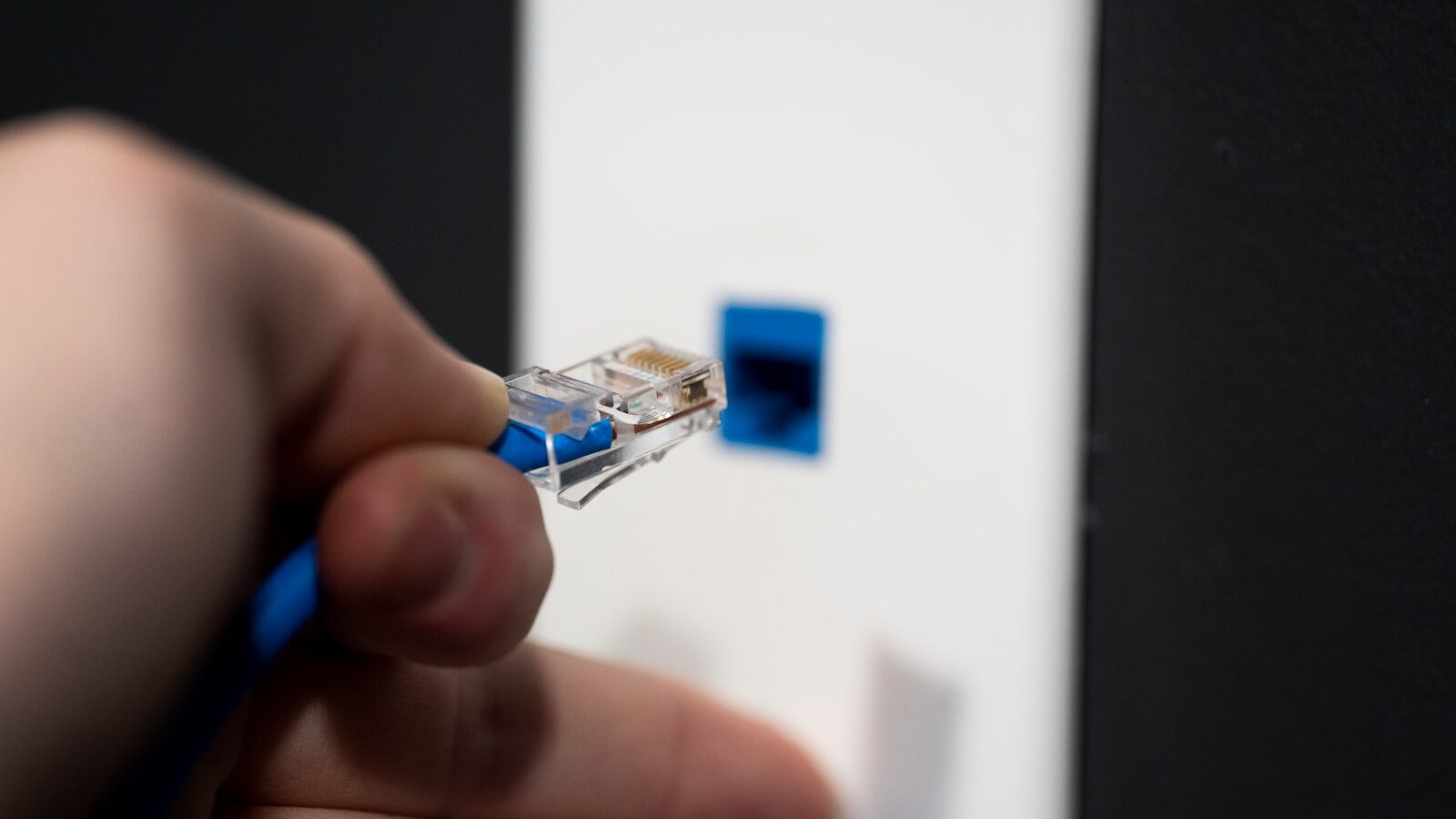
7. Check the Modem, Router, and Cables
If every device loses internet at once, inspect the equipment connecting your home network to the provider.
Check:
- Router power connection
- Modem or ONT power
- Ethernet cable between modem and router
- Visible damage to cables
- Loose connectors
- Warning or connection lights on the equipment
If a connector is loose, reconnect it securely.
Do not bend or disturb fiber-optic cables unnecessarily.
If your provider installed specialized fiber equipment and you suspect a physical fiber problem, contact the provider rather than attempting to repair the fiber yourself.
8. Compare Wi-Fi With Ethernet
If possible, connect a computer directly to the router using Ethernet.
Then observe whether the internet connection still drops.
If:
Ethernet remains stable while Wi-Fi disconnects
the problem is probably within the wireless side of the network.
If:
Ethernet and Wi-Fi lose internet together
investigate the router’s internet connection, modem or ONT, provider service, cabling, or other upstream components.
This test can narrow the problem much faster than changing dozens of Wi-Fi settings.
9. Check for an Internet Provider Outage
If both wired and wireless devices lose internet, check whether your provider is reporting a service problem.
You can:
- Check the provider’s status page or app.
- Contact support.
- Check the modem or ONT status indicators.
- Ask whether there is maintenance or an outage in your area.
A speed test alone does not prove whether an intermittent outage exists.
It measures the connection only while the test is running.
10. Update Router Firmware
Router firmware updates can include:
- Security fixes
- Compatibility improvements
- Stability fixes
- Bug fixes
Many modern routers install firmware automatically.
For others, use the router manufacturer’s official app or administration interface.
The exact update procedure varies by model.
Avoid downloading firmware from unofficial websites.
Do not interrupt power during a manual firmware update.
11. Restart the Affected Device
If only one device is having problems, restart that device before changing advanced networking settings.
A temporary operating-system or wireless-adapter problem may disappear after a normal restart.
If other devices continue working normally, there is little reason to reset the entire router immediately.
12. Forget the Wi-Fi Network and Reconnect
A saved Wi-Fi profile can occasionally become problematic.
On the affected device:
- Open Wi-Fi settings.
- Select the network.
- Choose Forget or Remove.
- Reconnect to the network.
- Enter the Wi-Fi password again.
Remember that forgetting the network removes saved connection information.
Make sure you know the password before doing this.
13. Update Windows and Wi-Fi Drivers
If a Windows computer is the only device disconnecting, check for operating-system and network-driver updates.
Start with Windows Update.
If the problem began after a driver change or Windows does not provide a suitable update, check the support page for:
- Your laptop manufacturer
- Your motherboard manufacturer
- Your Wi-Fi adapter manufacturer
Download drivers only from trusted manufacturer sources.
Do not use random third-party driver-updater applications.
14. Check Windows Wi-Fi Power Management Only When Relevant
Some Windows systems allow the operating system to reduce power to a network adapter.
This may matter if disconnects occur after:
- The laptop wakes from sleep
- The computer runs on battery
- A long idle period
If the problem matches that pattern, inspect the Wi-Fi adapter’s power-management settings.
The exact options depend on the adapter, driver, and Windows version.
Do not automatically disable every power-saving feature on every computer simply because Wi-Fi disconnects.
15. Do Not Disable Phone Battery Features Without Evidence
Generic advice often recommends disabling battery optimization or low-power modes whenever a phone has Wi-Fi problems.
That is usually too broad.
Android manufacturers implement power management differently, and iPhone Low Power Mode does not normally need to be disabled simply to maintain ordinary Wi-Fi connectivity.
If disconnects occur only when the screen is off, during a specific app, or under a particular battery mode, then investigate those device-specific settings.
Otherwise, leave normal battery management alone.
16. Test Without a VPN or Proxy
A VPN problem can sometimes look like an internet outage.
However, a failing VPN connection normally does not mean the Wi-Fi radio itself has disconnected.
If the Wi-Fi icon remains connected but websites or apps stop working:
- Temporarily disconnect the VPN.
- Test the internet normally.
- Reconnect the VPN.
- See whether the problem returns.
If internet access fails only while the VPN is active, investigate the VPN application, server, protocol, or provider.
Do not conclude that the router’s Wi-Fi is broken.
17. DNS Is Usually Not the Cause of Wi-Fi Disconnecting
DNS converts domain names such as example.com into IP addresses.
A DNS problem can cause:
- Websites to appear unavailable
- Slow name resolution
- Some services to fail while the connection itself remains active
But changing DNS does not normally fix a device that repeatedly disconnects from its Wi-Fi network.
Do not change DNS servers as an early fix for wireless instability.
First determine whether the Wi-Fi connection itself is dropping.
18. Be Careful With Private or Randomized MAC Addresses
Modern phones and computers can use randomized or private Wi-Fi addresses to improve privacy.
This feature normally works correctly and should not be disabled as a routine troubleshooting step.
It may occasionally cause issues with unusual networks that rely on:
- MAC-based access control
- Device-specific network registration
- Special DHCP reservations
Only test disabling private addressing for a specific network when you have evidence that the network depends on the device’s fixed MAC address.
Otherwise, leave the privacy feature enabled.
19. Check Whether the Router Is Overheating or Unstable
A router that repeatedly crashes or restarts can create apparent Wi-Fi disconnects.
Check whether the router:
- Feels unusually hot
- Frequently reboots itself
- Loses status lights during disconnects
- Has poor ventilation
- Uses an unstable power adapter
Place the router where air can circulate around it.
Do not cover ventilation openings or place it directly beside strong heat sources.
If the router regularly restarts on its own, hardware or power problems may be involved.
20. Consider Router or Device Compatibility
Sometimes one older device has difficulty with newer router features.
Potential compatibility issues can involve:
- Wi-Fi security modes
- Band steering
- Wi-Fi 6 or newer features
- Older wireless drivers
- Legacy smart-home devices
Do not weaken the entire network’s security immediately just to accommodate one problematic device.
Update the device first and check the router manufacturer’s compatibility guidance.
21. Use Network Reset Only After Simpler Steps
Windows, Android, and iPhone provide options to reset network settings.
These can be useful when device-specific networking configuration appears corrupted.
However, network reset can remove:
- Saved Wi-Fi networks
- Network preferences
- VPN configurations
- Other networking settings
The exact effect depends on the operating system.
Try restarting and forgetting/reconnecting to the specific Wi-Fi network before performing a broader network reset.
22. Factory Reset the Router Only as a Last Resort
A factory reset removes the router’s configuration and returns its settings to factory defaults.
It may help when the configuration itself is badly corrupted.
It does not remove firmware bugs or magically repair failing hardware.
Before resetting the router, make sure you know:
- How to reconnect it to your internet service
- Your ISP connection details if required
- Your desired Wi-Fi network name
- Your Wi-Fi password
- Any special settings you need to recreate
The reset procedure varies by router.
Do not assume every model uses the same button-hold duration.
Follow the manufacturer’s instructions for your exact device.
A Good Troubleshooting Order
Instead of changing settings randomly, use this sequence:
- Check whether Wi-Fi itself disconnects or only internet access fails.
- See whether one device or every device is affected.
- Restart the affected device.
- Restart the router or gateway once.
- Test close to the router.
- Compare Wi-Fi with Ethernet if possible.
- Check cables and provider status.
- Forget and reconnect to the Wi-Fi network if only one device is affected.
- Update router firmware, Windows, and relevant drivers.
- Investigate interference, bands, and channels.
- Test VPN or device-specific settings only when symptoms point to them.
- Use network or factory resets only after simpler steps fail.
This approach helps you identify the cause instead of accidentally fixing one problem while creating another.
Quick Wi-Fi Disconnect Checklist
- Determine whether Wi-Fi or internet access is actually dropping.
- Check whether the problem affects one device or the entire network.
- Test the device close to the router.
- Restart the router once as a diagnostic step.
- Inspect modem, router, power, and Ethernet connections.
- Compare Wi-Fi with a wired connection when possible.
- Check for ISP outages.
- Keep router firmware and device software updated.
- Forget and reconnect to the network if one device is affected.
- Do not change DNS to fix a Wi-Fi radio disconnect.
- Do not disable MAC randomization unless you have a specific reason.
- Do not factory-reset the router until simpler troubleshooting fails.
When Might You Need a New Router?
Replacement may be worth considering when:
- The router frequently reboots unexpectedly.
- Wi-Fi continues dropping on multiple devices after configuration and provider problems have been ruled out.
- The hardware no longer receives important firmware or security updates.
- The router cannot provide reliable coverage for the area you need.
- There are clear hardware or power failures.
Do not replace the router simply because Wi-Fi disconnected once.
Diagnosis first can save you from buying hardware that does not solve the problem.
Conclusion
The most important step when Wi-Fi keeps disconnecting is identifying whether the failure is happening between the device and router or between the router and the internet.
Check whether one or all devices are affected, compare Wi-Fi with Ethernet, test signal strength by moving closer to the router, inspect cables, and update the relevant software before making major configuration changes.
Avoid generic fixes such as changing DNS, disabling privacy features, or factory-resetting the router unless the symptoms actually point toward those settings.
Working through the problem in a logical order makes it much easier to find the real cause of an unstable connection.
For more troubleshooting guides, visit Fix & Repair.