

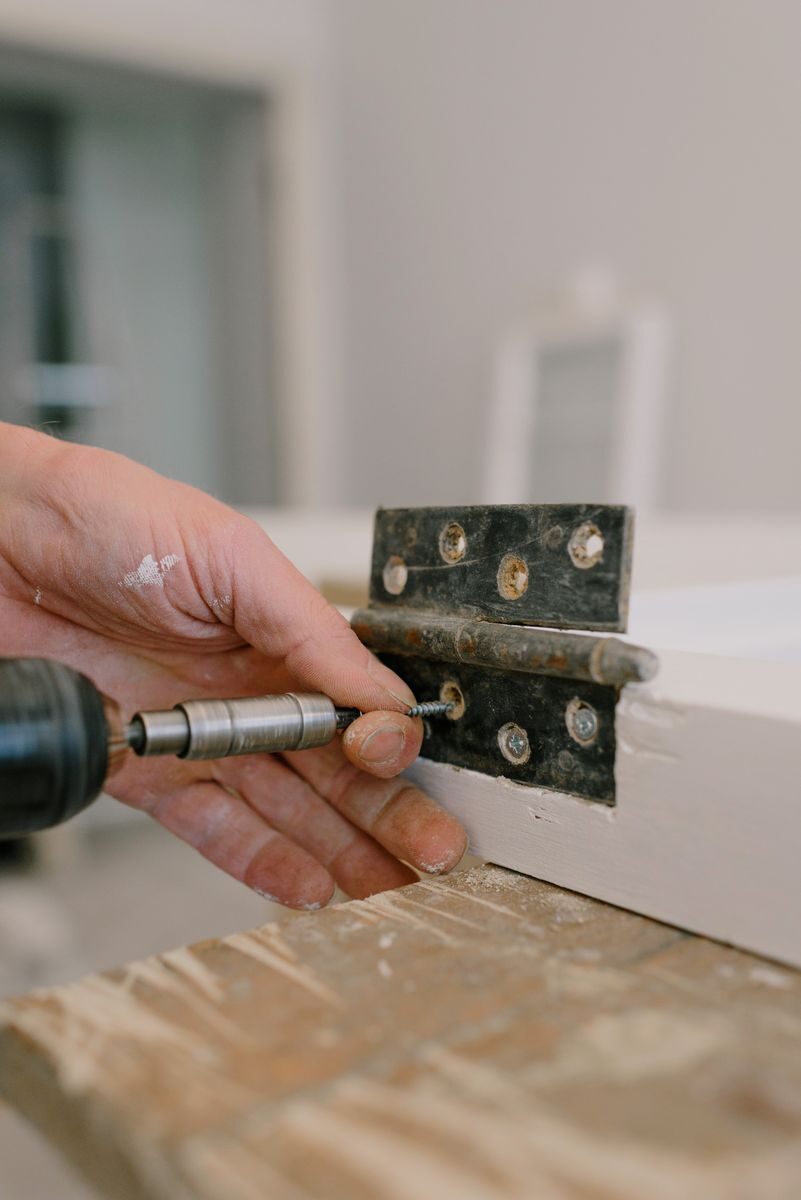
Find the cause of a sticking interior door and learn how to fix loose hinges, minor rubbing, and alignment problems. Most sticking doors can be repaired with a few simple adjustments before sanding or planing becomes necessary.
Why Does an Interior Door Start Sticking?
A door that suddenly becomes difficult to open or close does not always need major repair. In many cases, the problem comes from loose hinges, slight movement in the frame, humidity, or layers of paint that have reduced the clearance around the door.
Before removing any material from the door, identify exactly where it is making contact with the frame. Starting with the simplest possible cause can prevent unnecessary sanding, drilling, or adjustment.
Find Where the Door Is Rubbing
Open and close the door slowly while watching the gap between the door and the frame.
Look for areas where the clearance becomes noticeably smaller. Common contact points include:
- The upper corner near the latch side
- The side of the door near the lock or handle
- The bottom edge of the door
- The top edge near the frame
Paint marks, scratches, polished areas, or small dents can also reveal where the door is rubbing.
You can lightly mark the suspected contact area with a pencil so you can check whether later adjustments solve the problem.
Check and Tighten the Hinges
Loose hinges are one of the most common reasons an interior door begins to sag.
Check every hinge screw on both the door and the frame. Tighten loose screws carefully with a screwdriver rather than immediately using a powerful drill, which can strip the screw hole.
Pay particular attention to the upper hinge. Because it carries a large part of the door’s weight, a loose upper hinge can allow the opposite side of the door to drop and rub against the frame.
If a screw continues turning without tightening, the hole may be worn. Depending on the condition of the frame, replacing it with a slightly longer screw may allow it to reach solid wood behind the hinge plate.
Avoid using excessively long screws unless you know what is behind the frame.
Check the Door Alignment
Once the hinges are secure, close the door again and inspect the gaps around it.
Ideally, the space between the door and frame should appear reasonably even.
If the top gap becomes narrower toward one side, the door may still be sagging. If the entire door appears shifted, the problem may involve the hinge position or frame rather than the door itself.
Small alignment problems can sometimes be corrected by tightening or repositioning hinges. More significant frame movement may require professional repair.
Consider Humidity and Wood Movement
Wood naturally expands and contracts as humidity levels change.
A wooden interior door that works normally during dry months may begin rubbing during a humid period. Bathrooms, kitchens, basements, and poorly ventilated rooms are particularly likely to experience moisture-related movement.
If the rubbing is very minor and appears only during humid conditions, you may not need to modify the door immediately.
Improving ventilation or allowing indoor humidity levels to stabilize may reduce the problem.
Check for Paint Buildup
Several layers of paint on the door or frame can gradually reduce the clearance around the edges.
Inspect the area where the door is rubbing. Thick paint ridges, drips, or rough surfaces may be the actual cause rather than the wood underneath.
Minor paint buildup can often be smoothed carefully without significantly changing the shape of the door.
Avoid aggressively removing material until you are certain that the problem is not simply loose hardware or excess paint.
Sand a Minor Contact Point
If the hinges are secure and the door still rubs in one small area, light sanding may be enough.
Remove only a small amount of material at a time.
After a few passes with sandpaper:
- Remove the dust.
- Close the door.
- Check the clearance.
- Repeat only if necessary.
Frequent testing helps prevent removing too much material and creating an unnecessarily large gap.
Whenever bare wood becomes exposed, seal or repaint it afterward. Unsealed wood can absorb moisture more easily and may swell again.
When Should You Plane the Door?
Planing removes material much faster than sanding and should therefore be used more cautiously.
It may be appropriate when a larger section of the door edge is making contact and smaller adjustments have not solved the problem.
Clearly mark the area that needs correction and remove very thin amounts at a time.
Do not plane large sections of the door simply because one small corner is rubbing.
If you are unsure whether the problem comes from the door, hinges, or frame, it is better to investigate further before removing permanent material.
Check the Latch and Strike Plate
Sometimes a door appears to be sticking when the actual problem is the latch.
Close the door slowly and watch whether the latch lines up with the opening in the strike plate.
Signs of poor alignment include:
- The latch hitting the edge of the strike plate
- The handle needing to be lifted or pushed to close the door
- Visible scratch marks around the strike plate
Small alignment problems may be corrected by tightening or slightly repositioning the strike plate.
Quick Checklist
- Open and close the door slowly to identify the contact point.
- Check all hinge screws before sanding or planing.
- Inspect the upper hinge carefully for signs of sagging.
- Look for paint buildup around the rubbing area.
- Consider whether humidity may be causing temporary swelling.
- Sand only the specific area that is rubbing.
- Remove very small amounts of wood and test frequently.
- Seal any exposed wood after sanding or planing.
- Check the latch and strike plate if the door will not close properly.
When to Call a Professional
A simple sticking door is usually a minor maintenance issue. However, professional inspection may be worthwhile if several doors suddenly become difficult to close, the frame appears visibly distorted, large cracks develop around the doorway, or the problem repeatedly returns after adjustment.
Those signs may indicate movement in the frame or another issue that cannot be solved by simply sanding the door.
Conclusion
The safest way to repair a sticking interior door is to start with diagnosis rather than immediately removing wood. Locate the rubbing point, tighten the hinges, check alignment, and consider humidity or paint buildup first.
Only sand or plane the door when simpler adjustments have not solved the problem, and remove material gradually.
For more practical home repair guides, visit Fix & Repair.